Wow, Karen's right. This blog slot seemed to charge right up.
I've been up to my elbows in the final push to get this ms. finished and out the door, which is the reason for my absence the past couple days. I am so close, but the deadline for this contest I'd wanted to enter (top prize is publication with Touchstone and $5,000)is midnight tonight. So my chances of getting finished and entered don't look too hot. I'm goign to keep trying until it's too late...
But enough about me. Let's talk about you and your skills at word play, 'cause I know you all have skills, and that's what today's blog is all about -- more having fun with words:
The Washington Post's Style Invitational once again asked readers to take any word from the dictionary, alter it by adding, subtracting, or changing one letter, and supply a new definition. Here are this year's winners:
1. Bozone (n.) The substance surrounding stupid people that
stops bright ideas from penetrating. The bozone layer, unfortunately, shows little sign of breaking down in the near future.
2. Cashtration (n.) The act of buying a house, which renders
the subject financially impotent for an indefinite period.
3. Giraffiti (n) Vandalism spray-painted very, very high.
4. Sarchasm (n) The gulf between the author of sarcastic wit and the person who doesn't get it.
5. Inoculatte (v) To take coffee intravenously when you are running late.
6. Hipatitis (n) Terminal coolness.
7. Osteopornosis (n) A degenerate disease. (This one got
extra credit).
8. Karmageddon (n) It's like, when everybody is sending off all these really bad vibes, right? And then, like, the Earth explodes and it's like, a serious bummer.
9. Decafalon (n.) The grueling event of getting through the day consuming only things that are good for you.
10. Glibido (v) All talk and no action.
11. Dopeler effect (n) The tendency of stupid ideas to seem smarter when they come at you rapidly.
12. Arachnoleptic fit (n.) The frantic dance performed just after you've accidentally walked through a spider web.
13. Beelzebug (n.) Satan in the form of a mosquito that gets into your bedroom at three in the morning and cannot be cast out.
14. Caterpallor (n.) The color you turn after finding half a grub in the fruit you're eating.
And the pick of the literature:
Ignoranus (n): A person who's both stupid and an asshole.

Thursday, March 15, 2007


Wednesday, March 14, 2007
Turning Lemons into Lemonade

Bloggedy-blog blog blog. Wow, this came up fast. Totally unprepared and busier than I've ever been, I'm gonna have to write a slam-dunk blog. Please forgive the typos and meandering thoughts as I throw this together.
Uhm... Lemons. Well, that would be rejections, but you already guessed that. We all get 'em and they can be very discouraging. Sometimes demeaning. Always disappointing. A triple D threat.
However, I want this to be a positive blog, which is why I'm using the lemonade analogy. I could also use the get-back-up-on-that-horse analogy, but lemonade makes me think of summer. And it's tastier.
This is on my mind because I recently had a short story rejected by an anthology that was near and dear to my heart. This is the story I worked on at the coast last fall at our retreat. I had so much fun writing it and was really pleased with the results, but alas, the anthology's editorial board said "it didn't meet the anthology's criteria." Bummer. I suppose the story was a bit out there (Zombies, but not the flesh-eating kind, I promise) and I shouldn't be suprised, but still. A rejection is a rejection and my first impulse was to take it personally.
So I took that shiny yellow lemon and got a lemonade thing going by submitting it elsewhere. I knew Echelon Press was having a contest and the deadline was the same day I learned my story wasn't accepted. Serendipity. So I submitted it. The very next morning I heard from the publisher, and though I didn't win the contest, she liked my story so much that she asked if she could publish it in their regular fantasy line of short story downloads (50% royalty... nice). So my tasty lemonade will soon be available to short story readers everywhere.
The lemonade theory works for novels, too. My Wild Rose Press release, Desert Guardian, was originally intended for Silhouette Intimate Moments. And even though they sent me a 5-page revision letter and the revised manuscript was bounced around in consideration-land for over 15 months, they ultimately rejected it. But my new publisher picked it up in less than 2 months and I've been quite pleased with the results. Nice lemonade.
So do you have any lemons in your fruit basket? Are you willing to sweeten them up for a refreshing beverage ready to serve to your eagerly awaiting readers? Or have you already done it? If so, what were your results?
Speaking of anthology, I can't resist (this is just for you, Danita):
anthology (n) -- the study of ants that lisp.
Tuesday, March 13, 2007
Time Flies! Or, Oh Crap! It's My Turn To Blog Already?
I've not been reading the blogs lately because I'm working pretty much full-time, which was supposed to be part-time; plus, I'm still a mommy and wife, so yeah, I'm sorta outta the loop, and if Eli hadn't sent out the reminder, well, I'd not have blogged today. That being said, by the time this blog is over you'll all be wondering why I bothered at all. LOL
So the topic of connected books is an interesting one, and then Paty brought up the fact that she wants to write a new series she's been pondering. Well, In keeping with the last two blogs by Eli and Paty, I'm going to let you all in on a few things I've come across lately.
First, writing connected books with a "sorta" HEA is what a best-selling author named Suzanne Enoch has been doing the last couple of years. She has the same two main characters and just continues to put them through different situations while keeping them together, but apart. (ACK! And I call myself a writer. What sort of explanation was that?) Anyway, the series is about a thief extraordinaire Samantha Jellicoe and a British playboy millonaire Richard (Rick) Addison. This is a series that may be a helpful example of what you're trying to accomplish Paty because I think this is exactly what you were talking about. Book one is called, "Flirting With Danger". Book two is called, "Don't Look Down"; and I believe there's another one coming out soon, but don't quote me.
Suzanne Enoch's website is here
Okay, on to a different topic...
The other day I found this cool place on the net for checking out favorite authors. It's called Romance Novel TV so if you have something faster than a dial up connection, go check it out! They have JR Ward, Nora Roberts, Christina Dodd, Eloisa James, Shirley Hailstock, Cathy Maxwell, Caridad Pineiro, Mary Jo Putney, Julieanne MacLean, Rebecca York.
The authors talk about writing, selling, life of a writer or best-selling author experiences, etc...
Well, there you have it. My boring blog post. I don't have a question of the day. Sorry. I'm quite boring. ;)
Sunday, March 11, 2007
Speaking of Connected Books
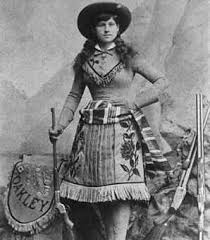
As some of you know, I came up with an idea for a series a while back. It will be a western historical series. With a female protagonist who is a Pinkerton Agent.
I was thinking if I write it along the lines of Janet Evanovich's Stephanie Plum series, there is never really a HEA. Which is most likely why her books are not in the Romance line up at stores. So... My thought was, though I have an on again off again relationship between my protagonist and a U.S. Marshal, I would still need a HEA ending in all my books to keep it on the romance shelves- right?
My thought was to incorporate a romance between two secondary characters in each book which would end happily ever after. What do you think? Would this be too distracting from the main protagonist or just the right fuel for the romance audience (besides the protag and her marshal) to keep romance faithfuls reading the next book?
Have you ever read any books like this? With the secondary characters falling in love, but the main story is about the main protagonist. If so, could you give me the titles and authors so I can read a few and see if I can really pull this off.
Friday, March 09, 2007
Those Darn Connected Books
 That's me over there, smacking my hand against my head with a, what were you thinking expression. (Although I hope I'm not as ugly-looking as ol' Homer.)
Actually, I do this a lot. In the privacy of my home. Give myself a whack when I realize what I've done is the stupidest thing on the planet. Okay, maybe not stupid. More like...uninformed.
I've hit the zone. You know, the one, when you're writing, when nothing else matters. Kids can scream, food can burn, the TV can blare in the background and you hardly notice it. You don't care that you've just given the baby a cupcake at . . . 9:31 in the morning to shut him up. You don't care that the older Gremlins have turned on some kick-fighting, blood-letting cartoon you wouldn't in your right mind ever let them watch. You simply tune everything out and write. I liken it to the high a runner gets when they hit the groove (the one I rarely get to because I give up way too soon) - legs lengthen, breathing regulates, you pass that Mt. Rushmore wall of stone and you feel like you could go . . . forever. Man, it's a great feeling. The words literally fall right out of my fingers, move across the keys themselves and miraculously appear on the page as if my brain wasn't connected at all.
So what's so stupid about that? Here it is. The book I'm working on now is a book that's been churning in my head for eons. I'm not sure why it has to come out now, but I'm not questioning the zone. Go with the flow, let the characters guide you. That's my motto. The problem is, it's connected to a book I wrote a while back, one my agent is reading at this moment. Whether or not she likes the first book, and whether or not it sells is irrelevant to me at this point. I'm writing this book. This story has to be told and my characters have such a noose around my neck, I couldn't stop now even if I tried. The issue I have is when I wrote the first book way back when, there were secondary characters that were included in that book - that play a bigger role in this book - that weren't fully formed. Yeah, I know. I can hear Karen and Genene yelling, character charts! character charts! But they don't work for me. This character wasn't formed yet because he didn't have to be. At the time, he was a very minor secondary characters, lurking in the shadows who I knew one day would step out into the light, it just wasn't his time. In this book, though he's still a secondary character, he's suddenly twisting and turning and becoming something I hadn't seen before. That's the "doh" moment. I knew he had issues in book one - but I couldn't see them clearly. Now I do.
Of course, I'm lucky. The first book hasn't sold, hasn't been edited by my agent. It's very easy to go back and make the very minor changes to darken this particular character to the degree that needs darkening. An easy fix for me as an unpublished, but I can't stop thinking about how published authors handle this sort of thing.
I love connected books. Feed off them, really. That anticipation of yearning for the next release is a high I, though I grumble about it, love to experience. The book I'm working on now is part of a series, sort of. Connected characters in what could be 4-5 books if I ever got around to doing them all, although each book would be stand alone and could be read out of order. That's my goal, really. Not simply to sell, but to be able to sustain a series like that. I get goosebumps just thinking about it. I just can't help but wonder how published authors do it. I mean, the desire to go back and change this character in the first book to match what I've discovered in book 2 is overwhelming, to say the least. What do you do when it's already printed and done and can't be changed?
Last fall when we were all at the beach, you might remember I was banging my head against a wall working on a proposal to send my agent. That, too, was a connected book idea - to the book my agent is still shopping around. My problem - as Lisa finally made me see - was that I was already working with a semi-formed character - one who'd had a very large secondary roll in the first book. I couldn't seem to twist him around to what I needed to go with the idea I'd come up with for the new book, and no matter what I did, he screamed, "No way!" I finally gave up and decided it wasn't time for him. Maybe he needed more time to fully form. Maybe the plot I thought was brilliant was really a POS. Maybe I just wasn't ready to write that book. I don't really know, but I do know working with semi-formed characters is much harder than starting fresh with someone new or even working with fully-formed characters.
This book, the one I'm working on now, isn't like that because the hero in this book - while a secondary character in the other one - has been fully formed in my mind for a long, long time. Probably long enough that I know him so well, I know what he has to do. As Alice told me yesterday when I mentioned this to her, "Some books almost write themselves. I think that's especially true when it's been simmering on a back burner for awhile."
I think I took a strange tangent here and got off topic, so I'll try to veer back. Do any of you write connected books? And if so, how do you keep your characters consistent from one book to the other, especially very minor ones who don't necessarily need to be fully formed from one book to the next?
Thursday, March 08, 2007
HAVE YOU KEPT YOUR NEW YEAR'S RESOLUTIONS?
I read recently that people rarely stick with their New Year's resolutions past mid-February or so. All that determination to lose weight and eat healthier melted with a half-gallon of Haågen Das (spelling?) ice cream and a movie marathon from which you've only stirred to get up and call in sick to work.
Can you find the piece of paper you wrote your resolutions on? Did you resolve not to even make resolutions?
Well, I do remember my resolutions sounded pretty "high falutin'." More of a life's mission statement that was the result of brainstorming what was important to me and the things I wanted to accomplish. But I had to dig to find the easel-sized sheet of paper with all my brainstorming -- now folded and buried under my lists of things to do!
Yep, that mission statement still sounds pretty noble: Do work I love that will provide more money than I ever dreamed possible, that will allow me to play and refill my creative well, and will keep me healthy in body, mind and spirit while nurturing my relationships.
Am I still on track or have I fallen back into old habits? Well ... a little of both. I am doing work I love, and making progress on meeting the challenge of not overbooking my time. I haven't finished the manuscript I wanted to complete in January, but I'm pleased with how the characters and plot are deepening. And I haven't made my fortune yet, though I got a call about a graphics job that should pay for my trip to the San Juan Islands this fall. This trip will be a combination of work, play and learning that fits perfectly with that noble mission statement.
I've also seen mixed progress in other things I wanted to accomplish. Maybe I expected too much. Maybe I'm not working as quickly or efficiently as I could be. However, it's been good for me to revisit the brainstorming that went into my mission statement. I don't have all the specific goals mapped out on my calendar yet, but I'm going to do that to help keep me on track. Maybe this goes hand-in-hand with anal-retentive plotting of stories!
How about you? Do you set goals? Do you keep those goals? Or are you a goal pantster and just leap off the abyss and trust that a net will catch you? Is that how you write too? Is there any correlation?
Wednesday, March 07, 2007
B-L-O-C-K-E-D
This post is brought to you by the fine folks at benadryl. Apologies for my bloggy absence this week---I've been fighting a horrid case of hives and thanks to the miracle of antihistamines, setting world records for sleep.
But, onto writing, of which I have been doing precious little of late. I am b-l-o-c-k-e-d, a state I hoped never to return to again. After all, I battled through a 6+ month block in 2006. I figured that should earn me some block insurance. But, no, a combo of new job and new pregnancy gave me a double whammy, and now, I have to find my way back.
Having resolved to do so, I've been trying different strategies many of which I've gleaned from all of you:
Yes, letters. Stop laughing now. Letter writing is a fine art form. Fictional letters have even been the basis for entire books. So, I made my characters write letters to each other about where they are *right now* (otherwise known as the plot-stuck-in-hades-place) and I'm slowly seeing my way through the plot haze to the other side. I'm going to keep with the letters a little longer, and I'm trying not to see it as busy work. Instead, I see it as critical insight into my characters, which will hopefully enable me to finish this book within this millennium.
I think one of the greatest challenges of writing is figuring out how to capture "the zone" and how to keep your brain there. The zone is more than a space to write--it's HEAD SPACE--and it's a very fragile thing.
So your turn. What unblocks you? What ways back to your characters have you found? Have you tried having conversations with them that aren't part of the book? Other ideas, tips suggestions?
Have a great Wednesday!
But, onto writing, of which I have been doing precious little of late. I am b-l-o-c-k-e-d, a state I hoped never to return to again. After all, I battled through a 6+ month block in 2006. I figured that should earn me some block insurance. But, no, a combo of new job and new pregnancy gave me a double whammy, and now, I have to find my way back.
Having resolved to do so, I've been trying different strategies many of which I've gleaned from all of you:
- Brainstorm through the plot issues by talking to someone
- Staying connected to other writers
- Playing solitaire (Thanks Alice!) instead of using the internet to get my mind in the zone
- setting reasonable goals
- getting to know my characters again
Yes, letters. Stop laughing now. Letter writing is a fine art form. Fictional letters have even been the basis for entire books. So, I made my characters write letters to each other about where they are *right now* (otherwise known as the plot-stuck-in-hades-place) and I'm slowly seeing my way through the plot haze to the other side. I'm going to keep with the letters a little longer, and I'm trying not to see it as busy work. Instead, I see it as critical insight into my characters, which will hopefully enable me to finish this book within this millennium.
I think one of the greatest challenges of writing is figuring out how to capture "the zone" and how to keep your brain there. The zone is more than a space to write--it's HEAD SPACE--and it's a very fragile thing.
So your turn. What unblocks you? What ways back to your characters have you found? Have you tried having conversations with them that aren't part of the book? Other ideas, tips suggestions?
Have a great Wednesday!
Tuesday, March 06, 2007
Choosing Your Battles
 You get me two days in a row …
The other day I was writing a car chase scene with shots fired.
Now, I cannot begin to tell you how many times this very thing has happened to my husband and myself. There we are minding our own business when suddenly someone starts trying to run us off the road or fires bullets at us. I, of course, take the fully loaded revolver from the glove box and shoot back as the DH steers. Or I unlock the shotgun under the seat, rest it against the door frame and BLAST.
Okay, so it's never happened and yet here I am writing about it. Since it has never happened to me or anyone else I know (except, perhaps, Becky--maybe this is where she gets her loathing of all things icky, scary or violent!) where am I supposed to get the images that feed my eager little fingers? Yep, movies and television.
So, after I write the scene--which feels a little light weight to me--I make my way downstairs to cook dinner and actually stand for awhile (Yay!) and while puttering around, I turn on the television. They are running M*A*S*H reruns right now and I like them. The one that happened to be on that night was one where some of the characters make their way to the front. The FRONT, as in the line where the good guys and the bad guys do their best to blow each other up.
On the way back from the FRONT, bombs start falling around their Jeep. They dodge this explosion and that one until they leave the Jeep and take cover in a handy bunker.
A light bulb came on in my pea sized brain. I HAD AN EPIPHANY!
I turned to my husband and said, "So, which film better depicts the accuracy of a battle, Saving Private Ryan or MASH." He looks at me like I'm nuts and says, "Saving Private Ryan, of course." And I said, "Exactly. And it just dawned on me that I am writing MASH."
I know I'm not really writing MASH. What I'm trying to say is that I am depicting a gunfight or battle my characters are engaged in a sort of short-hand type manner. I am appealing to my audience who have grown up in the same culture I have grown up in, to call upon the images they have unwittingly stowed in their minds (just as I have) to follow my car chase and fill in some of the blanks because I am writing romance, i.e., I am writing about the characters, not the step by step dynamics of a car chase.
Currently, I am reading a police procedural series. The characters in this series investigate crime in a very methodical manner I imagine my police officer son would recognize. I like it, but I am more interested in why this character did this, why that characters said that, and are those two every going to realize they are meant for each other than I am the trajectory of every bullet.
There are many decisions to be made while writing and making poor choices throws the reader out of the book. If you are writing about horses and mention them chewing their cuds, almost any reader is going to throw your book against a wall and shout, "That's a cow, you moron!" You need to get the details right, but you also need to advance your story in a compelling way. That's one of many balancing acts we perform.
I think some of writing these kinds of scenes is instinct. We "see" the battle, for instance, in our head. We press down on the accelerator pedal. We hear the tires spinning. We see jouncing headlights as the car in pursuit hits a bumpy spot. We feel the heavy gun in our hand and the anxiety and fear that pushes its way up our throat. We imagine all this and report it as well as we can.
Or we come across a body. How many bodies have my characters found during the course of the past umpteen books? Many. How many have I found? Zip. I've seen dead people, but only those than died peacefully or once, in a bizarre visit to the morgue with my soon to be newspaper reporter daughter-in-law, those that died less peacefully but had already been cleaned up and sanitized. Of course, like millions of Americans, I am no stranger to violent death courtesy of film. So, again, I have images. And again, I choose which images to use with each incident.
And it changes from time to time depending on how important the character is to the plot, how important the means of death is, from whose perspective I use (a former cop is going to see things differently than a small child or an old lady and that goes back to individual perspective, a subject that fascinates me.)
Whether you write romantic suspense, mystery or straight romance, historicals, paranormal or YA, you are making heavy-weight decisions about what you show a dozen times a book, maybe a dozen times a page. And you are deciding at what level you are going to take realism. I guess I'm finally growing a little more comfortable with the fact that it's okay to use your imagination and depart from literal truth or from reporting every detail in order to make your action scenes come to life, trusting that your reader will travel with you and maybe even fill in a few of the blanks.
What decisions do you struggle with? Is it always instinct that guides your choices about how to best "shoot" a scene (like a film director might set up camera angles, wait for the right light, call in hair and make-up to make sure everyone in the scene is just right?) Any hints? Any troubles? And like me, do some of you who have been doing this for awhile find that it gets more complicated as time passes? And is that because we are willing to entertain more options or because we're getting (saying it ain't so) dumber?
I'm on the fence with that last one!
Monday, March 05, 2007
Misery
 Has everyone seen the movie MISERY by Stephen King?
I shied away from it for years but a couple of weeks ago, I checked it out of the library and watched it.
This is a summation of the plot: SPOILER ALERT: A writer is holed up in the snow, finishing a manuscript. Through a phone conversation with his agent, we learn he's been writing about a character named MISERY for many years. The public so loves this character that's she's all he writes about now and he's sick of her. In this book, he claims independence by killing her off.
He starts home in the snow and ends up in an awful accident. He's rescued from sure death by a woman who's a nurse and for awhile, it seems, he's one lucky guy even if he can't walk because his legs are broken. The rescuer recognizes him from the picture on his book covers (she's read them all over and over again) and claims she is his "number one fan. " As she managed to rescue his latest manuscript as well, she asks if she can read it. He says yes.
Bad mistake. This woman is nuts and when she reads that he kills off MISERY, she goes ballistic. In the scene that prompted this blog, she brings a small BBQ into his sickroom, a can of lighter fluid and a match. She opens the lid of the BBQ and there is his book. She tells him he can't do this to MISERY and demands he burn this terrible manuscript. As the demand is made by a crazy woman, he is forced to comply and destroys the book he has just written.
What a scene this is. Her offering his latest work, the culmination of a series of books and months of agony, like a sacrificial lamb because it doesn't fit her idea of his character's destiny.
She then claims God came to her and explained His purpose in having the writer under her roof. The writer must write a new book for the Misery character and this time, make it happy. The crazy woman eagerly reads the pages as the writer feverishly creates the new book. During this time, he is also escaping his room when she leaves the house, and now knows what a homicidal maniac she really is. He has to get out there.
Eventually, he's got the new book all the way to the last chapter where MISERY is going to make the choice of which man she will marry. The maniac is agog with lust to find out the answer as this character is more real to her than the man she has tortured and confined. In a brilliant turn around, he presents her with the last chapter only to destroy it before she can read it. She comes unglued, they battle, THE END.
As a writer the two most poignant scenes for me was him being forced to destroy his manuscript on the eve of delivering it to his agent, and him taking back the power by thwarting his "public" and denying them the happy ever after he'd been forced to create. (This would seem to be more a problem for the Stephen Kings of the world than the Alice Sharpes, but there you go.)
Have you seen this movie? I talked to my family about it the next day. I mentioned the two scenes I just described and the unexpected murder of a third character that broke my heart and everyone else looked at me like I was nuts. They talked about the scene where the maniac rebroke the writer's ankles to keep him chained to his bed (and his typewriter.) That was the worst scene for them and I suddenly realized that the endless parodies of that scene had been what kept me from watching this movie for so long. Yet in the end, it barely registered while the vision of that BBQ with a perfect lily white manuscript set squarely in the middle and the author's hand poised to send it up in smoke still lingers in my mind.
My point: writers are crazy, reader's are crazier.
We make stories, but once they hit the world, they belong to whomever reads them to take them into their heart and mind or trash them at will, to remember them forever and yearn for more, for it never to end, or to disown the writer because the writer has disappointed them, has spoiled things for them.
I am a reader every bit as much as I am a writer and I have felt this way. There are books in my life that are part of me, that belong to me, that speak to me, that I read and reread. Books that I seldom, if ever, think about the author or the process because it's the story that matters, the people they created are a million times more real than they are--afterall, they are just a name on the front cover or a picture on the back. The writer, in my reader's mind, is little more than the vessel through which MY story comes to me.
Annie Wilkes, move over.
What do you think?
Friday, March 02, 2007
Sacred Space: Where I Write
So, we're building a house.
And the thought occurs that I am going to have a brand new writing space. I'm not what you might call a "versatile" girl when it comes to where I write. Unfortunately. When I write in spaces other than my home desk/office, I have a hard time getting the words to flow. I have a laptop and even when I take it to my dining room table, it's difficult to "get in the zone."
I'm sure it's purely psychological, but there it is.
In all of my years of performing the written arts, I've had a special space for writing. When I first began, at the tender age of eleven, I sat in my bedroom at an old wooden desk and wrote painstakingly by hand. With the advent of computers, it moved into the spare bedroom. Through adulthood and many apartments, I have always designated one area as my "sacred writing space."
We've been in this house for less than two years. I don't have an "office." I have desk in the middle of the playroom (obviously, my priorities have changed in recent years). But, it's my space. I have some crystals set out on my desk: aventurine for creativity, clear quartz for mental clarity (I have yet to achieve this feat). In my diffuser, I have various essential oils burning for various purposes. My bulletin board sits to my right, pegged with misc. info relating to my current WIP. The children scream behind me. The dog comes up and starts his manic episode (dancing in circles, barking loudly, nudging my hand. He wants to pee).
When the kids (DH included, of course!) start bugging me for things like food, water, etc., I bare my imaginary fangs and hiss (I've discovered a yen for becoming a vampire since reading JR Ward's vampire series--thanks, Eli and Lisa!).
This doesn't work. My DD laughs and my toddler has no earthly clue what a "vampire" is.
But, I digress.
So, come summer, I will be in a new space. This one will actually have four walls all for me! The mind boggles. In my head, I've already been painting the walls. I think I will like this imaginary space when it comes into being.
So, how do you ladies feel about your own personal "sacred" writing space?
Thursday, March 01, 2007
Word Play
Let's Play with Words
I am bloggless this morning, and just realized it is my day to post. ACK!
So, here's what we're gonna do...we're gonna copy Piper and use an hilarious email of word play, only this one is from my auntie, not Piper's husband. And, instead of puns, today's chuckle is this:
Once again, The Washington Post has published the winning submissions to its yearly contest, in which readers are asked to supply alternate meanings for common words.
The winners are:
1. Coffee (n.) the person upon whom one coughs.
2. Flabbergasted (adj.) appalled over how much weight you have gained.
3. Abdicate (v.) to give up all hope of ever having a flat stomach.
4. Esplanade (v.) to attempt an explanation while drunk.
5. Willy-nilly (v.) impotent.
6. Negligent (adj.) describes a condition in which you absent-mindedly answer the door in your nightgown.
7. Lymph (v.) to walk with a lisp.
8. Gargoyle (n.) olive-flavored mouthwash.
9. Flatulence (n.) emergency vehicle that picks you up after you are run over by a steamroller.
10. Balderdash (n.) a rapidly receding hairline..
11. Testicle (n.) a humorous question on an exam.
12. Rectitude (n.) the formal, dignified bearing adopted by proctologists.
13. Pokemon (n.) a Rastafarian proctologist.
14. Oyster (n.) a person who sprinkles his conversation with Yiddishisms.
15. Frisbeetarianism (n.) (back by popular demand): The belief that, when you die, your Soul flies up onto the roof and gets stuck there.
16. Circumvent (n.) an opening in the front of boxer shorts worn by Jewish men.
Funny huh? Now, let's think of our own silly meanings to words. I'll mull this over today and may come up with more. But only one pops into my groggy, didn't-get-enough-sleep-last-night-head at the moment:
1. Claustrophobic (n.) a person afraid of white-haired men wearing red.
I know, groan. But you can do better. I challenge you to come up with one or more of your own.
Wednesday, February 28, 2007
Second Fiddlers

This is the title of a workshop I gave at a Colorado Gold conference a few years ago. I also gave it at the Bend Christian Writers Conference and will be giving it next Month at a Redmond Writers meeting. I wish I had the space to really get into it here because it's a very involved topic. I created a character hierarchy of 3 levels of secondary characters and 8 subcategories. Yep, I take my secondary characters VERY seriously. 8^) The amount of research I did would fill a book.
I've proposed my workshop to the Emerald City conference and am waiting to hear back.
Here's a really brief overview.
Purpose of Secondary Characters:
• To aid the main character in his or her story goal and to help define the main character’s role in the story.
• To provide obstacles that prevent the main character from reaching his or her goal.
• To force the main character to prove his/her worthiness in reaching the story goal.
• To help a main character grow and assist him in completing his character arc
• To provide contrast and comparison with the main character physically, emotionally and mentally
• To provide drama because conflict can’t happen in a vacuum
• To interact with the main character and force him to show his true colors.
• To broaden the scope of the story with texture and variety.
• To expand a story’s theme (ex: The Big Chill — reunion story that is enriched by the variety of character types.)
• To develop subplots that add multiple dimensions to the main plot
So how much research and thought do you put into your secondary characters? If you'd like a copy of my hierarchy chart, I'll be happy to email the pdf to you.
Karen
Tuesday, February 27, 2007
A Fun Pun Blog
Sometimes we need to belly laugh. It cleanses the tear ducts, strengthens the stomach muscles, produces healthy hormonal stuff in the brain and body, and sometimes it can even make one wet ones pants; unless of course one is wearing a skirt, in which case it just runs where it may. What I'm getting at is, laughing is important and good for the soul and yes, it can get a little messy.
I'm cheating on today's blog post and using something my DH sent me via email. It made me belly laugh, (without the wetting of my pants thank goodness, but it was a close one, I mean come one, I've had five kids!) I felt so light and cheery after reading these I just had to share with you. May you be uplifted in the frivolity, and if you can think of any you'd like to add, please, be my guest.
It's a writer's job to entertain, whether through a story that is melancholy, scary, or funny, it's all entertainment. We seek out the best books and writings to give us what we're craving. I personally enjoy things that uplift and make me happy. The power to activate the human creature's emotions through the written word is pretty incredible. I'd like to grow up to do that someday. But in the meantime, here's something that someone else wrote and I hope it moves you, you human creatures. :)
Deja-Moo: The feeling that you've heard this bull before.
Two antennas met on a roof, fell in love and got married. The ceremony wasn't much, but the reception was excellent.
A jumper cable walks into a bar. The bartender says, "I'll serve you, but don't start anything."
Two peanuts walk into a bar, and one was a salted.
A dyslexic man walks into a bra.
A man walks into a bar with a slab of asphalt under his arm, and says: "A beer please, and one for the road."
Two cannibals are eating a clown. One says to the other: "Does this taste funny to you?"
"Doc, I can't stop singing 'The Green, Green Grass of Home. " That sounds like Tom Jones Syndrome."
"Is it common?" "... Well, It's Not Unusual."
Two cows are standing next to each other in a field. Daisy says to Dolly, "I was artificially inseminated this morning." "I don't believe you," says Dolly. "It's true; no bull!" exclaims Daisy.
An invisible man marries an invisible woman. The kids were nothing to look at either.
I went to buy some camouflage trousers the other day, but I couldn't find any.
A man woke up in a hospital after a serious accident.
He shouted, "Doctor,doctor, I can't feel my legs!"
The doctor replied, "I know you can't - I've cut off your arms!"
I went to a seafood disco last week...and pulled a mussel.
What do you call a fish with no eyes? A fsh.
Two fish swim into a concrete wall. The one turns to the other and says,"Dam!"
Two Eskimos sitting in a kayak were chilly, so they lit a fire in the craft. Unsurprisingly it sank, proving once again that you can't have your kayak and heat it too.
A group of chess enthusiasts checked into a hotel, and were standing in the lobby discussing their recent tournament victories. After about an hour, the manager came out of the office, and asked them to disperse. "But why," they asked, as they moved off. "Because," he said, "I can't stand chess-nuts boasting in an open foyer."
A woman has twins, and gives them up for adoption. One of them goes to a family in Egypt, and is named "Ahmal." The other goes to a family in Spain; they name him "Juan." Years later, Juan sends a picture of himself to his birth mother. Upon receiving the picture, she tells her husband that she wishes she also
had a picture of Ahmal. Her husband responds, "They're twins! If you've seen Juan, you've seen Ahmal."
(Oh, man, this is so bad, it's good)
Mahatma Gandhi, as you know, walked barefoot most of the time, which produced an impressive set of calluses on his feet. He also ate very little,which made him rather frail and with his odd diet, he suffered from bad breath...This made him A super-calloused fragile mystic hexed by halitosis.
And finally, there was the person who sent twenty different puns to his friends, with the hope that at least ten of the puns would make them laugh. No pun in ten did!
Monday, February 26, 2007
Voice
I just read Shirley Jump's comments on voice on the Ask An Author Pro loop. She said you should be able to open a book without looking at the title or author and know who the author is by reading. Every author's voice should come through in their work. She suggested comparing author's styles and voice to help you learn if you’ve found your voice.
Then my oldest daughter started reading Gambling on an Angel this weekend. "Mom this is much better than the last one." She said after reading three chapters. Then this morning she told her husband it was my fault she wasn't up and dressed because she was reading my book. So now I'm thinking - so what is my voice? I remember being at a writer's weekend at
PS: I added another grandchild this weekend. She is adorable. 8 months old and such a good baby!
Friday, February 23, 2007
Quirks
 One of the things we strive for as authors is a way to make our characters come alive on the page. We want them to be real. Real people have quirks and habits, and incorporating those oddities into your characters is one way to make them pop. But when do character quirks cross the line to writer quirks?
I just finished a book - the fourth one I've read by this particular author - and one specific trait stood out to me. One of the characters slammed their fist against the steering wheel in a moment when they were extremely frustrated. In and of itself, this isn't a big issue, but it stood out to me because this is something I would never do. I've been upset while driving, even angry at the driver next to me, but I've never slammed my fist against the wheel. What is extremely unique about this particular "quirk" is there has been at least one character in each of the four books I've read by this author who has slammed their fist against the steering wheel. When I read the line in this fourth book, it popped me right out of the story. The characters suddenly became two-dimensional to me. I realized, this isn't a character trait, this is an author trait.
I have lots of strange quirks - don't get me wrong, we all do. I twirl my hair when I'm bored or stressed. I pick at my fingernails, I bite the inside of my lip. But because these are habits *I'm* consciously aware of, I try to be careful not to incorporate them into my characters. If I do, I know I'll continue to do it from one character to the next. Sometimes we don't realize we're adding these little oddities into our writing. I had a CP once whose characters were "cupping" all the time...cupping her face, cupping her hand, cupping her breast. Her agent pointed it out to her and she's never used that word (or quirk) again.
I love characters who have unique quirks. One may play with her necklace all the time, another may tap his hand against his thigh repeatedly. One may jingle change in his pocket, and another may bite her lip when she's nervous, still another may chew on the end of a pencil. The question, however, becomes, are the quirks you're incorporating into your characters your quirks or their unique oddities? And are you too close (or blind) to see the things you do over and over?
What unique quirks do you have, and have you (or do you) include them in your writing? If not...how do you make sure you don't give your characters the same bad habits from one book to the next?
Thursday, February 22, 2007
Spring Cleaning for Books?
I know this is REALLY LATE! Big apologies. Just completely slipped my mind. Bad Wavybrains!
So, I know February is almost over, but my bedroom, bookshelves, office, and boxes in the hall are still all piled with my 2006 reading. My husband calls this "book carnage" and notes that the the price of heating oil would hurt a whole lot less if we could burn them (sacrilege!) or insulate the attic with them (abusive!). Normally, I rely a lot more on the library and thus, don't add bulk at quite this clip, but breaking my foot (which also added a different kind of bulk) contributed to my mother shipping me more books, fewer trips to the library, and a small addiction to half.com. So, I've got a lot of Spring Cleaning (which presupposes that I do ordinary cleaning . . . .) ahead of me, but parting with books--any books is particularly painful. I'm thinking that the nursery's theme may be "library."
So how do I decide if a book is a keeper for me? Multiple reads, characters that linger, desire to start again from beginning as soon as I'm done, wishing the book wouldn't end--all contribute. From my 2006 reading marathon, these books were definite keepers:
- The Unsung Hero by Suzanne Brockmann.
- All of Suzanne Brockmann's books could be on the list. I read her entire backlist in a three month period. But, this book was the first. It was the right book at the right time--I was finally on the verge of being able to write again. I've learned so much from Brockmann about characterization, subplot, voice. Each book is like a mini-workshop and a damn good read.
- Marshall in Petticoats by Paty Jager.
- I know (and love!) Paty, but this book is so much fun, I forgot I knew the author--it just drew me in and kept me up late. It proves that you can combine sweet and sexy. Prior to this book, I hadn't read a western romance in probably 10 years. This book got me reading westerns again and reminded me why they used to be one of my all-time favorite genres.
- Vegan, Virgin, Valentine, by Carolyn Mackler.
- I don't think I've ever listened to a book on tape twice before. This one was just that good. I read a lot of superb YA this year, but this one rose to the top easily--funny, great voice, characters that I can't get out of my head.
- Standing in the Shadows by Shannon McKenna.
- I discovered McKenna this year and quickly devoured her backlist as well. This was the book that hooked me on her. The heat is scorching, but it's the characters that make this such an enjoyable tale.
- Match Me if You Can, by Susan Elizabeth Phillips.
- I think I've re-read this book at least six times. Already. And used it as an example in bunches of discussions about writing. Fabulous pacing, great subplots, and funny. The heroine is so immediately likeable, you just want to hang on for the ride.
- Queen of Babble by Meg Cabot.
- I read a lot of Meg Cabot this year too, but this was my favorite. I like the new voice she's showing off here--it's different than her other adult books and a lot fun.
- Meditations for Women Who Knit Too Much, by Stephanie Pearl McPhee.
- Everyone always raves about Elizabeth Zimmerman and how her writing about knitting is so down-to-earth and fun. I read Zimmerman this year too, and may she rest in peace, but McPhee is the real deal. I had this book from the library and I was really loathe to return it (after the maximum renewals). Deep belly laughs like this are a rare commodity. You could read this without knowing a knitting needle from a crochet hook and still need to wipe your eyes from laughing so hard.
- The Devil to Pay, by Liz Carlyle.
- I was kind off historical. Then I read this book. The plot is really stellar and fresh--I think that's what did it for me. None of the old cliches of swooning misses and big scary lords apply here. After this book I started looking for (and finding) other fresh historicals, but the voice and characters of this one keep coming back to me.
- Bound by Sasha White
- I got this book on a complete whim. It gobsmacked me. Not just because it's Emma Holly-esque-envelope pushing-jump off the page hotness, but because the voice is fresh and fun. I'd never bought an e-book before, but I was so eager to read her other ST that I bought (and read) it the next day.
- Don't Look Down by Jennifer Crusie and Bob Mayer.
- When I heard that Crusie was writing with a GUY, I was more than a little skeptical. This book delivered though, and in a big way. Mayer adds another dimension to Crusie's work---it's still very much her voice here, but the suspense is a neat addition and the characters seem even more three-dimensional.
Wednesday, February 21, 2007
Talk It Out
 I have a 280 page manuscript due in a little over seven weeks and I am on page…drum roll please….80.
In other words, I am up against a wall and if I think about it too long, I will hyperventilate and cut my wrists and shoot myself and take sleeping pills and drive off a cliff…after I drink myself into a coma.
It's not that I haven't spent the past couple of weeks trying to get further than page eighty, it's just that I couldn't. And that changed this morning when I was talking to my daughter and she asked what was wrong.
Well, let me use my instant replay brain to tell you how it went:
Jen: "What's wrong?"
Me: "It's this book."
Jen: "I know it's worrying you. Talk about it."
Me: "Well---"
And then I told her the first three chapters are a beginning, a middle and an end unto themselves leaving chapter four a let down, a transition chapter, a housekeeping chapter (I have a million theories on this). When you sell on three chapters, you tend to write a rousing start, a move the book along second chapter, and an exciting climax for chapter three. Or at least I do. But as I was talking, I realized that all the things I was waiting to have happen after I established the groundwork didn't have to wait. Why did the first murder have to get sandwiched between this and that, why couldn't it come the first night? Why did the pools have to get filled with water in a week, hey, they're my pools, I can fill them whenever I want. Why did the heroine have to start questioning the bad guy a chapter from now, why couldn't she question him on the plane and grow suspicious, why couldn't she arrive already primed to go for it?
No reason. It's my world. I can change the time line.
Light bulb moment.
Now, I imagine you have no idea what I am talking about in these particulars because you haven't read the chapters or the synopsis. My daughter hasn't read the synopsis either. She didn't offer a thing in this conversation except the occasional, "But--" which I rudely cut off. She didn't have to say anything, I just needed to talk and I needed to talk to someone who had read enough to know a little of what I was saying, and I needed to talk to someone I trusted and whom I knew could offer help if I ever shut up long enough to let her.
And it worked. And because I have no memory span, it amazes me it worked even though it's worked a dozen, two dozen, times before.
Try it. Find someone who fits the above criteria and when you get stuck, when you spend way too much time identifying why something isn't working instead of figuring out a way to make it work, call them, talk to them, let it all out and see if you don't accidentally come up with the answer you need more or less by yourself with just the right amount of prompting by them.
Let me know if this works for you in the future or if you have used it in the past. I'm back to my book….
Tuesday, February 20, 2007
Perseverance
I'm the guest blogger today!
(Disclaimer- I am not judging anyone who doesn't wish to be published this is just my perception)
I've been skimming the chat on the Pro Ask an Author loop about Perseverance. This seems to be the biggest thing you need to have going for you to become published (aside from some writing/storytelling) talent.
You have to be able to persevere past the rejections, the contest judges criticism, even the criticism or critiques of your critique partners. You have to have an open mind and take it all in, shuffle it around, and then put it to use in your writing.
You have to be willing to keep on writing and honing your skills to get any where in this business. It is the perseverance to keep on putting yourself out there in a story. To work your butt off through revisions.
You, the writer, have to want to write so bad you ache inside if you can't get that story on paper, or you become so crabby when you don't have time to write, your family is ready to swap you for the old lady down the street who makes brownies.
If writing isn't as fundamental to you as air, water, and chocolate - then you may not have the perseverance to become a published author. It's not to say you won't write and keep on writing, but unless you take the time and find the means to continue to better your writing, you will never obtain a goal of becoming published or finding an agent.
So do you have the perseverance to become published or land an agent? Are those your goals?
Monday, February 19, 2007
10 Reasons Books Are Better Than Sex
I'm filling in today. Apologies this is going up so late...I didn't get the notice until a few minutes ago.
Because I had a rather frazzled morning, I thought we could all use a top-ten list to brighten our day. So without further ado...
10 Reasons Why Books Are Better Than Sex

10. The written word lasts longer than most husbands.
9. You can close a book and turn off the light when you're tired. Husbands (or significant others) are another story.
8. Romance novels give you that fuzzy "new love" feeling, even if you've been married 15+ yrs.
7. When you write, you have time to come up with all those witty and sexy one-liners you forget in the heat of the moment.
6. Stories never get old.
5. Crying is acceptable. (Even expected!)
4. If you get interrupted by the kids, you don't feel guilty.
3. No chance you'll throw your back out.
2. You can do it anywhere - even on a crowded bus - and no one bats an eyelash at you.
And the number one reasons books are better than sex...
1. Even when you're entrenched in the the steamiest sex ever, there's no chance you'll get pregnant.
Add to the list. I need a good laugh today. Or if you have your own writing-related top-ten list, I'd love to read it.
Because I had a rather frazzled morning, I thought we could all use a top-ten list to brighten our day. So without further ado...
10 Reasons Why Books Are Better Than Sex


10. The written word lasts longer than most husbands.
9. You can close a book and turn off the light when you're tired. Husbands (or significant others) are another story.
8. Romance novels give you that fuzzy "new love" feeling, even if you've been married 15+ yrs.
7. When you write, you have time to come up with all those witty and sexy one-liners you forget in the heat of the moment.
6. Stories never get old.
5. Crying is acceptable. (Even expected!)
4. If you get interrupted by the kids, you don't feel guilty.
3. No chance you'll throw your back out.
2. You can do it anywhere - even on a crowded bus - and no one bats an eyelash at you.
And the number one reasons books are better than sex...
1. Even when you're entrenched in the the steamiest sex ever, there's no chance you'll get pregnant.
Add to the list. I need a good laugh today. Or if you have your own writing-related top-ten list, I'd love to read it.
Thursday, February 15, 2007
Writing Beyond the Novel
Journalism vs. Fiction
I appologize for being so absent on the blog lately. As I mentioned on the loop, I was commisioned by one of the papers I used to work on staff for to write three feature stories. It was time consuming, and ate up most of my writing/computer time. But don't get me wrong, I'm not complaining. I had a blast doing it.
I'd forgotten how much I missed that sort of writing. Not only the writing itself, but getting out, talking with people and hearing what they had to tell. With this assignment in particular, it drove home the point that everyone has a story.
My assignment was to ask three ordinary people what the most amazing or interesting aspect of their lives is, or has been, then write a 300-word story for each and take photos -- action shots, portraits, or both.
I talked to a funny little guy who always reads a book while ambling along the roads in my neighborhood. Turns out, the guy -- who I thought was in his 50s -- is 69 and has run in over 100 marathons, including the big ones in New York and Boston. His whole family hiked all over Oregon when his children were young, and now he is a volunteer track coach for long-distance runners at the local high school.
I wrote about a 92-year-old retired teacher whose biggest change in life was electricity. As a child, her family had no electricity. She and her five siblings had to milk a dozen cows by hand and separate the cream in a hand-cranked cream separator. When she grew up and taught, she had to carry wood in to heat the one-room schoolhouse. Now, she says people have become so dependant on electricity, when the power goes out, she has to leave home because she can't stay warm.
The last story is about a couple who just celebrated their 65th anniversary. For 3 years in the 70s, Continental Airlines offered a special deal to senior citizens. For a flat yearly fee of $1,100, once a week the couple could travel anywhere Continental flew. One year they took 35 trips to places like Hawaii, New York, Florida, Canada and Mexico. She moved to a retirement home seven months ago. Although he'd given her notes on Valentine's Day before, he'd never given her a gift. After 65 years, he finally gave her a heart-shaped box of chocolates.
Who says romance is dead?
In the post from Melinda Ruckert, it said couples who stay married for 50 years is 6%. What do you suppose the percentage is for pairs who make it to the 65-year mark?
I finished the last two stories and emailed them off to the editor today, so now you'll have to put up with me hanging around the blog again.
So what sort of writing do the rest of you do besides fiction books? Do you write press releases, journalism, technical writing etc...? Are you paid for it? (I was fortunate enough to get paid for the features). What sort of writing did you used to do? Did you/do you love it or hate it? Miss it or not at all?
The Inner Battle

I eeney-meeney-miney-moed the topic for this blog and the tiger's toe today is conflict.
There are a variety of conflict issues to choose from in fiction, but the one I consider most challenging as well as fascinating is inner conflict. This personal battle of the id is core to your character's story arc so it's loads of fun to mess with as you get into your plot.
Whether you begin planning from your story's premise or from its characters, the inner conflict driving a character's actions will be the engine that runs your plot. And it's up to us as authors to use torture as fuel to spur a character into action. Life isn't perfect. People aren't perfect. And readers enjoy reading about real people in pain who struggle with family, lovers, careers, their health, and all the other stuff they can relate to. The deeper an author delves into character, the richer the experience for the reader.
We like our characters. So it isn't easy to turn the knife and send them screaming from scene to scene, but that's what readers want from the fiction they read. I'm exaggerating (as usual), but my point is that no one wants to read about the world of the happy people. B-o-r-i-n-g. There are various degrees of torture from murdering a character's rare orchid worth thousands of dollars to having a character's family member succumb to cancer. Nevertheless, the experience of both examples will influence a character's behavior in the next scene. One bounces off the other, creating another crisis, which yields yet another, and another… The tension increases with each torturous episode in a character's life. And that's what makes a story compelling.
Is it possible to go overboard with inner conflict? Can an author push the envelope too far and end up in the gaudy land of melodrama? What's worse: going too far, or not going far enough?
Wednesday, February 14, 2007
Erotica...Romance or Smut?
Remember when romance novels were taboo? You'd hide them behind some other book or rip off the covers so no one would know what you were reading; after all, they were "bodice rippers" and heaven forbid you be caught dead reading one. I personally don't remember those times, but I know people who do. LOL
Over the last 20 years or so, extremely talented authors have worked very hard to change the image of romantic fiction so as not to be viewed as smut or bodice rippers, but alas, I feel tis all in vain. (Don't you love drama?) However, I proudly read the romance novels I buy right in front of anyone because I buy true romance and have no need for embarrassment or shame.
My point? I'm getting to it.
I have a peeve to discuss here. It has to do with the February edition of RWR, page 6, to be precise. There's an advertisement that just blew me away. Seriously, I was offended.
Here comes a confession... I am one of those people that has HUGE opinions. I know, you had noooo idea that was part of my personality. Anyway, it is my Huge Opinion that this ad shouldn't be in the RWR. It's pornography. Plain and simple.
Go ahead, dig out your February edition, now turn to page 6, yeah, that's the one. Disgusting. Absolutely no need for it. I guess I'm one of those "old fashioned" kinda romance readers that like some things left to the imagination.
I admit it. I don't understand what's so appealing about "erotic romance". I've read exactly ONE erotic romance. I hated it. I felt icky after reading it. I read it because it was recommended by a friend and I wanted to have a somewhat informed opinion about this type of writing. Personally, I don't see where it fits in the genre of true romance. It's really just about eroticism and that, my dear readers, is not romance, it's gratuitous non-intimate sex.
Now erotic sex with your spouse is wonderful and should be embraced as long as you're both equally up to it; and intimate sex, meaning, sex that is all things loving and kind, can mix with erotic sex when you have that close marital bond, too. But it's totally not love or intimate when you have down and dirty erotic sex with someone you hardly know. Nope, in my opinion that's not love, it's lust, and I have a problem with that being part of the romance genre.
So now that I've opened up this topic, you may expostulate me to your hearts content. But my opinion on this genre will never change. Flay away! :)
Tuesday, February 13, 2007
Promotion - Me or the book
Monday, February 12, 2007
Loop-de-loop. All it does is confuse me.
 Anyone reading the pro-class loop right now? I get it on digest, so there's a lot I miss (and skim through). In case you're missing it, the topic is persistence...basically how persistence pays off in this business. One published author, Jennifer Greene (writes as Alison Hart), and one unpublished author, Ruth Kaufman, are giving lessons and answering questions.
I don't usually comment on these things, but I read whatever piques my curiosity. This one got me:
On the topic of money, Jennifer Greene said:
[Aside from a computer] ...the only other expense I consider absolutely essential is the national conference.
Someone then asked her why the National Conference, and she said:
I think the national tends to be worth every $--although more so both when you're very close to publishing and in the first years after being published.
Well, it's no surprise I'm waffling on the whole national conference thing again this year. First of all, it's in Dallas. Been there, done that. I rarely leave the hotel during the conference, but still, it's Dallas. In July. Late July. Last year in Hotlanta we miraculously missed the heat. I have a feeling Dallas won't be the same. But aside from that, I've done two national conferences. They were good, I networked, I had fun at both, but was it worth all the money I'm forking out? If I was pushing a book, maybe? But unpublished? I'm not so sure. A lot of the workshops were the same from year to year, and though I learned a lot from both experiences, I think, honestly, I learned considerably less the second time. I'm just not sure it's worth the money for air, hotel and registration when I'm not bringing in any money with the sale of a book yet. After Atlanta, I said I wasn't going again until I sold. And I was sticking to that until reading this loop.
So I posed the question again...why, specifically for "almost there" authors? And Ms. Greene responded with:
At the cost of the RWA national conference, I can well understand it could be too expensive for many to attend. (And just getting published hardly means you're making big bucks either.) But...one of the reasons this business is so hard is that we work with people we can't see or form any kind of direction relationship. From editors to agents to publishing professionals, getting a chance to see how these people look, how they talk, if you could imagine working with them, who you think you could click with--etc--are critical things you can do to help yourself. A new writer has little chance to get a lot of one-on-one time at the national conference--I realize--but almost all the publishing professionals who attend are participating in workshops and events, so you can at least hear and see them. I can't prove this (!) but I believe you'll find that 80% of the 'bad agent' stories come from writers who've never met the agent before signing with them. Likewise, many, many of the 'horror editor' stories could probably have been prevented (or made better) if we just could deal with these people face to face. Also, editors--and agents--you hear at conferences come back to haunt you. (So to speak.) The good editors stick around--they may change jobs (five zillion times) but they'll tend to stay in the business. So every contact you make, if you have a goal of being a long term author, really can pay off.
Hmm...Makes sense, but I'm still waffling (call me Alice). The hubby and I talked about it this weekend. He's supportive of whatever I want to do - go if I think it's worth it career-wise, don't if I think it's not. Luckily, we should be getting a pretty nice tax return, so I could set money aside for the trip. Problem is, I have no clue whether it's really worth it or not. Last year I went for two reasons. 1) I won the conference registration in a contest, and 2) I had this strange feeling I was supposed to be there for some reason. I went, I had a great time, I networked my butt off. But 6+ months later, I'm still not sure what that reason was. Nothing significant - that I can see - happened as a result of my being at that conference. Good things have happened for me career-wise since, but I don't think they were directly impacted by my being in Atlanta for the national conference. This year - so far - I don't have that strange feeling pushing me to go. Only this waffling, well, I'm not sure it's worth it debate going on in my head.
Luckily, I have time to decide, but I'm curious. I know some of you like smaller conferences, some of you like the National one. Some of you have been to both or want to go to one or the other. What inspires you to go to a conference? What do you expect to get out of it? And if you're unpublished, how do you justify the expense? And finally, someone please, just tell me what to do!
Friday, February 09, 2007
WRITING "THE END" IS ONLY THE BEGINNING
I "finished" my latest manuscript the other day and shared the news on the loop -- with the caveat that meant a lot of editing and some big gaps to fill in. What does "the end" mean for your manuscript?
I remember what multi-published author Samantha James (a member of our chapter) said several years ago. She wrote about six pages a day, but those were usually pages that needed no editing. By the time they got down on paper, they were what she wanted. I was in awe.
No major rewrites, no spending thirty minutes searching an online thesaurus for the perfect word, no agonizing over a critique partner's comments and knowing "something" wasn't quite right but not being sure how to fix it, no brainstorms that provided the perfect answer but triggered additional research and rewrites in the remaining three-quarters of the book.
I do a lot of detailed plotting, yet I still end up doing several rewrites of a manuscript. Fortunately, the process of writing a manuscript seems to be getting easier. Or maybe I'm getting better at spotting where I went wrong and don't worry so much about tearing apart a scene or a chapter to make the story stronger.
This weekend I'll make a list of what still needs to be done on my manuscript and perhaps do some replotting to be sure I haven't dropped any story threads or subplots. Then I'll dig into additional research and start writing new scenes or beefing up ones I'm not quite happy with, as well as making sure the ratty orange cat that shows up on the heroine's doorstep turns into a sleek and pampered but still feisty feline by the end of the book. Yes, even the animals get a happily ever after in my stories!
How do you write? Are you a one-time through wonder who can produce a nearly perfect manuscript the first time through? Or do you do a dozen rewrites before you're getting close to satisfied? And just to satisfy my own curiosity, do you sit down and write whatever comes from the muse or do you write a detailed plot beforehand? Is there any relation between being a "panster" or a plotter and how many times you edit a manuscript?
Happy writing (and rewriting!)!
-Genene
Thursday, February 08, 2007
Casting Your Book
I've had the flu all week, so my apologies for being a bit sparse around the blog this week.
I'm also running low on brain power so I'm shamelessly borrowing an idea from Romance Worth Killing For.
Do you cast your books? Do you find suitable visual stand-ins for your hero and heroine to inspire you? In reading blogs, I noticed that a lot of authors seem to do this, and take a lot of pleasure in finding just the right pictures.
So, sometime back I decided to try to do this for my WIP:
 This is my heroine. Genevieve "Gen" Sullivan. My "star search" sent me in the direction of a lot of blond actresses. But, all seemed a bit too plastic for this heroine. Drew Barrymore's look in Never Been Kissed epitomizes the goofy-cute style of my heroine and her self-concious, but still zany sense of humor. I look at this picture to remind myself of her core qualities.
 Slap a ponytail on him, and this is my hero, Daniel Fair. Finding a suitable "actor" for my hero was a bit more a challenge. First, this hero is not the typical alpha hero. That ruled out 99% of the male-model type shots. However, he's not a ugly-duckly or some skinny nerd either. He's buff but sensitive. Like with my search for the heroine, I started with obvious physical characteristic and poured through dozens of pictures of pony-tailed guys. After finding the heroine through finding someone who embodied her essence, not just her physical traits, I asked myself who could *really* play this part. After all, hair can be grown/added. After seeing Tahmoh Penikett on both Smallville and Battlestar Galactica, I couldn't see anyone else playing the part. Buff, sensitive, not too talkative, not too alpha, quietly charismatic. I'll forgive him the whole no-ponytail thing.
Sometimes, I use my chosen "actors" to help me with characterization---is this how she'd play the part? What facial expression might she use? How would he react? Other times, I ignore the visual, preferring to rely on an internal picture of the character that's more unique and true to my vision. Sometimes, I use both in the same scene.
For my YA, I haven't been able to find the right image. She's a cross between the high school versions of Sookie on Gilmore Girls and Rachel Ray, but also has a snarky side that I just can't find a visual that truly captures.
So, how about you? Who's staring in your current WIP? Who's inspired past MS? Links to pictures would be great! Does the "casting" thing work for you or do you find it a waste of time? If it works for you, how do you find the "perfect" image? Discuss and share your eye candy with the rest of us.
Wednesday, February 07, 2007
Tell The Truth Poll
 Since Alice is off in Never-Never-Land (or maybe Wonderland...I think I have my fairy tales mixed up), enjoying the sun and fun, I'm taking over her day. (Aren't you thrilled?!)
Okay, since I can't think of anything witty to come up with, I thought I'd take a very un-scientific poll here. I want to know which of these things you've included in your writing:
1. Revenge Plot
2. Secret Baby
3. Amnesia
4. Love Triangle
5. Pregnant character
6. Kids
7. Twin Story
8. Marriage of Convenience
9. May-December Romance (or December-May)
10. Loony Secondary Character
11. Evil Best Friend
12. Hospital Scene
13. A character that dies then comes back to life (ah, the miracles of modern medicine)
14. An explosion
15. Someone being shot
16. Tears
17. An inebriated character
18. A writer (as in, your character, not you)
19. A cop
20. A pet
Okay, so fess up. Which of these have you used, and when and how? And if you've used all of them in one way or the other, I have a chocolate surprise for you at the next chapter meeting! (But you have to be able to explain each one.) ;)
Tuesday, February 06, 2007
Research: inspiration or procrastination
The book I'm working on requires a lot of research. I knew this going in, and was excited about it. Now I'm not so sure. I find myself getting hung up on small details - and I can't just leave a note to just find it later. Oh no, can't do that. Right Eli? I have to stop what I'm doing and look it up. Darn curiosity.
I'm having to do a lot of mythology research (wooooo!) and will have to do weapon and fighting research (boooooo!). Should have thought of that before I started writing I guess...I know there are tons of resources out there, but it's so time consuming to locate those details that make a story feel real. And heaven forbid it's wrong or doesn't sound authentic. Yikes!
My brain also gets sidetracked as I write. I'll be tooling along then have a brilliant idea, but one that requires research to flesh out. So I stop writing, go investigate, then loose my groove. Although on the rare ocassion the research actually gets me writing fast and furious. Those are the best times, ones where your fingers can't keep up with your brain.
I think the best way for me to work is to do much of the research before I begin writing. Since I'm generally a somewhat detailed plotter, I should know the informaiton I'll need ahead of time. Then I will have everything available when I need to incorporate it into the story without a lot of fuss. Or maybe even keep a notepad next to me as I write and jot down a "to research" list as I go.
What do you do about research? Do you do it all before you begin writing? As it comes up? Or save it till the end or during revisions? Please share any research tips you have, or even great resources you've found. Since my books are mythology based, I find a lot of great info at pandora.org.
Monday, February 05, 2007
Category or Single Title?
I got my first rejection Saturday.
It was a bummer, to be sure. I gave myself over to a brief "mourning" period, had a good cry and then really looked at the letter. I submitted to Harlequin, thinking that I was writing a category romance. Unfortunately, my story doesn't fit into the parameters of this line. Some part of me knew this all along. As I scrolled through the submission guidelines for each line, I thought, "You know, none of my stories fit into any of these lines." But, hey, I gave it the 'ol college try anyway.
I've discovered that my writing is a lot like my personality: I just can't seem to fit a round peg into a square hole. I was reading the last issue in RWR and I was struck by the author's statement, "When a door shuts, find a window" (I'm paraphrasing here).
So, I'm finding my window.
Because I can tell you right now that my second WIP is definitely not going to "fit" into any of the category parameters either. My window, such as it is, is single title. I'm standing on the edge of a precipice, fear pummeling my heart, self-doubt whispering "I don't know, Jen, are you sure you can do this?" For some strange reason, I'm terrified to make my book longer. I know I need to just bite the bullet. Get back on the proverbial horse and get my butt in gear. Beside, I can't know unless I try, right?
I think I made the mistake of thinking that category books were easier to write. This, I have discovered, was a gross miscalculation on my part, not to mention a big load of crapola. I think categories are, in fact, harder to write. But, why can't I let go?
So, how many of you write category length? And how many single title? Why do you like each style/type?
Friday, February 02, 2007
Bidda Bodda Bang
Do You Use Slang?
So, when it comes to slang are you down with it, or not with it at all?
Do you use it more in your writing or in your speech?
Let's take a look at what slang is. And what it isn't.
Slang is a (usually)fun (often) derogatory way to get your personal viewpoint across. It's also a (mostly) harmless way to rebel, or to have your characters rebel in dialog. Teenagers -- the drama king and queens of slang have been rebelling against authority and proper English use since, well since the beginning of time, I imagine. But I can only think of slang that goes back as far as the 1960s and the use of terms such as chick and hip and cat and cool and groovy and way far out, man!
These words were reinvented a bit before my time, but look at the lasting power of most of them. I mean, can you dig it, baby? Who doesn't use the word cool and chick at least once in a while?
Let's take a look at one particular word. Why? I don't know, maybe because it's fun, a little on the nasty side, and it happenes to be the word that popped into my head this morning. The word I'm thinking of has three letters. It starts with an "a" and ends with a double "s". If it isn't gray, have long ears or eat grass, it's an ass slang. Or is that ass in a sling? Maybe it's a crazy ass, a wild ass, a scary ass, or a big ass -- a redneck term for such things as tire size: "That there lifted four by four's got some big ass tires."
See? Slang is dad gum fun. More fun than a barrel of monkeys.
What slang isn't.
Well that's a a no-brainer. Slang is the words likely to get ya lots of red-marks all over that there English paper of yours. Kind of like that last sentence. But composing that English paper takes some creativity and a sense of fun that slang tends to push in front of the bus and onto our plates.
Besides slang there's euphemisms. Which are sort of the same thing. But I looked it up in my dictionary to be sure.
You-fuh-miz-ums: A mild or agreeable expression substituted for a realistic description of something disagreeable.
Immediately poop, pee, tinkle, sprinkle, doo-doo and number two come to mind. But maybe that's just me. What about all those entertaining euphemisms for vomit? Barf puke Ralph up-Chuck (poor guys named Ralph and Charles) and my personal fave -- praying to the porcelain God.
If you get intoxicated you could be blottoed, stoned, wasted, snockered, plastered, tipsy, or stinkin' drunk. In which case see the above paragraph for colorful words to describe what you went home and did after you partied till the cows came home.
So, if you think this was a silly thing to blog about. You're right as rain. And you're wrong as teats on a bore too. Slang may not win you the Pulitzer prize. Which I will never win anyway becaause I'm not even sure how to spell it...but peppering your character's dialog or thoughts with slang can shape them and bring them alive for your readers. And really, as writers, what more can we hope for?
The question of the day is: Slang -- do you love it, or hate it? Are you a slang teetotaler or a roaring slang drunk?
Thursday, February 01, 2007
Lights, Camera, Book Video Action!
I apologize for getting this up so late but I've been slammed with work. That's a good and bad thing, but I've had no spare time except to eat and sleep for the past week or so. I'm such a cry baby! Wah!
I'm copping out today by posting a past issue of my Promo Tips newsletter. Even if you don't yet have a published book, I think the topic of Book Teasers is interesting. Where are these little video tidbits taking the book world? Do they work?
Book Teasers
I'm talking about the video or animated variety that many authors are using as previews to entice potential readers to check out their book. It makes sense. We're living in a video age of flash and animated video games, Xboxes, DVDs, infomercials, music videos, YouTube.com, etc. It seems a natural for the book blurb to evolve into the entertainment equivalent of the movie trailer.
There are a variety of teasers on the web, some that appear as major productions with actors and special effects. Other's that aren't much more than a slide show with music. I've never priced out the production costs for a full-scale mini-movie, but expect to pay three to four thousand dollars if you decide to go that route.
Don't despair! You have other options. I've seen some homemade book videos that aren't bad, and if you're creative enough you can do a bang up job all on your own. I've experimented with my own video and it's not that difficult, just time consuming.
The main ingredients for a "home produced" book teaser video is a computer. If you're reading this in your email, you obviously have one of those. Most of today's PCs come preloaded with fun stuff for making your own home movies, and you can use those tools to make your video.
For PCs running Windows, there's software called Movie Maker and you can download it at http://www.microsoft.com/windowsxp/downloads/updates/moviemaker2.mspx
For us Macintosh users, we have iMovie, which I imagine is pretty much the same thing. You link video clips together, plug in music and sound effects, have type dance across the screen and fade in and out along with other visual enhancements. And you don't have to be a professional moviemaker to do this. You just need time and a bit of computer savvy. Once you've created your movie, you can email it, post it on your website, even feature it on your blog. If you use a Mac, learn more about iMovie and download it at http://www.apple.com/ilife/imovie/
I'm sure you're wondering where to get the images for your fabulous movie production. That's easy. Aside from taking your own photos with your digital camera, you can purchase royalty-free stock photos online for as little as a buck apiece. These stock photo resources usually have stock video clips you can buy for as little as ten bucks each, depending on their length. My favorite resource is iStock.com, but if you google "stock video images" you'll find all kinds of stuff. And, of course, you can always shoot your own with your video camera.
I've found some great video footage of generic things like waves crashing on a beach, traffic, kids playing in a park, blowing sand in the desert, thunderstorms, you name it. And you can use Flash graphics, royalty-free, from these same sources.
As for music, there's lots to choose from in cyberland. Royalty-free music download sites abound, but they' ain't cheap. For a 30 second spot you're looking at about twenty-five bucks. But I gotta tell you, these orchestrations are tons of fun. Go spend some time at my favorite one listening to demos and you'll see what I mean.
Did I hear you say you want to use something from your own collection of CDs? Don't even think about it. That music is copyrighted. Royalty-free music is not, but you gotta pay for the privilege.
Maybe you don't have time to make your own movie and would rather have someone else do it. That's fine, too. Here are a few resources:
The absolute best, in my opinion, is Circle of Seven Productions.
Vidlit is another favorite of mine, but they use mostly flash instead of actors.
Expanded Books does a variation on the teaser by incorporating an author interview with dramatic clips from the book.
The Romance Design Studio does book videos, and they look okay, but you could do the same thing for yourself with Movie Maker or iMovie.
So what do you think of book teasers? Do they have any effect on your book buying decisions? Do you think you'll do one for your book?
Subscribe to:
Posts (Atom)